Developer: Housemarque, Climax Studios
Publisher: PlayStation Publishing LLC
Steam Deck Compatibility?: Unsupported
Rrp: £49.99 (Humble, Steam and Epic)
Released: 15th February 2023
Available on: Humble, Steam and Epic
Played Using: An Xbox One Control Pad
Approximate game length: 20+ Hours
Over and over you return, always coming back to the same familiar place that is different every time. Usually you start anew, keeping nothing but your experience. But sometimes you bring something else with you, something hard fought for, something that may allow you to finally break this awful cycle or at least take a step towards that goal. And so, again you set out on your ceaseless task…
Returnal is a third person, roguelite bullet hell set on the planet Atropos. You play as Selene Vassos whose ship, the Helios, has crash-landed while she was investigating a signal called ‘The White Shadow’.
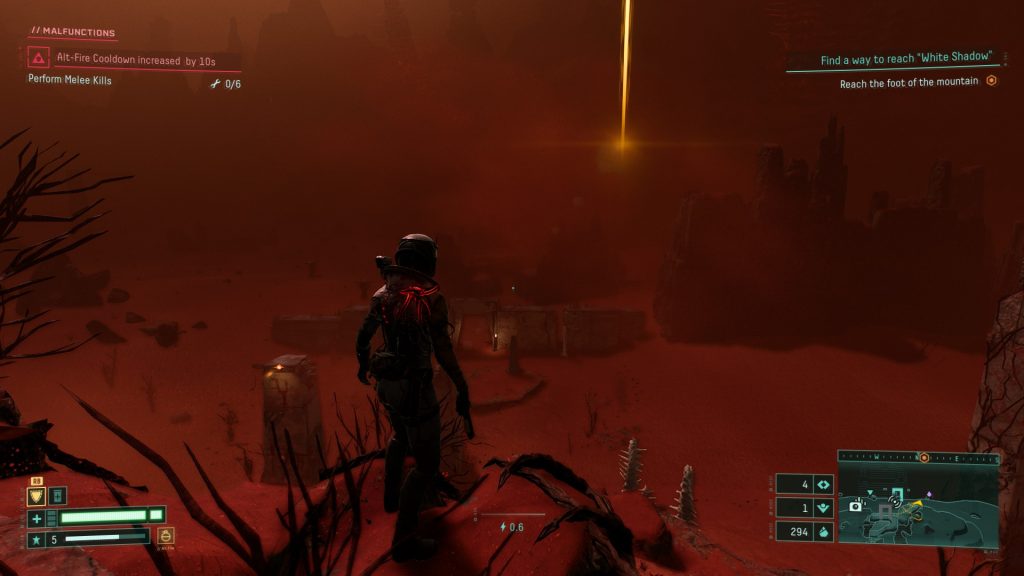
Just like any good roguelite, when you die or begin the cycle again the world changes and you lose all the materials you have collected (unless it’s a permanent upgrade to your suit). You always wake up either beside or inside the Helios. On the occasion that you do wake up in the Helios you’ll find that it’s one of the few times that the game enters into first person, allowing you to walk around what’s left of the small ship. Within the Helios are two terminals, the main terminal and the challenge terminal. The main terminal shows your overall statistics and the ship’s logs. These logs are text documents that unlock as you progress through the game giving more background on Selene and her relationship with the White Shadow signal. The challenge terminal is unlocked later in the game and allows you to take on the daily challenge runs against other players.
Being a bullet hell the battlefield can become quite busy with attacks of varying shapes and types for you to avoid. This is where your dash ability comes in handy as it allows you to dash through most attacks without taking any damage, though there is a short recharge time between each dash.
I’m happy to say that the weaponry in this game doesn’t fall into the trap of not feeling like they have any real weight or kick to them that many sci-fi weapons do. Something else to remember is that quite a few of the enemies aren’t content with only shooting at you and will attempt to attack you in melee.
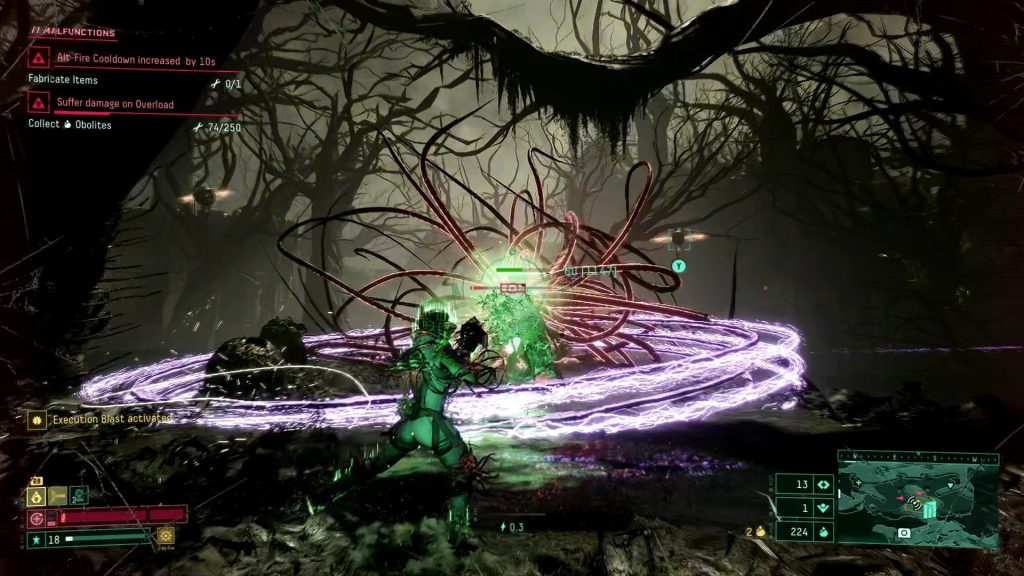
You can only carry one weapon at a time and rather than being manually reloaded your weapons instead need a short time to recharge, with each weapon having a different recharge time. That being said, there is a function called ‘overload’ that can occur when you deplete your weapon entirely. If you activate the overload function your weapon will immediately be recharged and ready to fire. However, this involves pressing the [Right Trigger] at the moment the small recharge meter reaches the designated area, if you miss it then your weapon takes slightly longer to recharge. This might sound easy to do, but it becomes significantly more difficult to do when trying to also dodge enemy attacks.
All the weapons also have a secondary attack that usually does a lot of damage but has a much longer recharge time, thankfully while the secondary attack is recharging you can continue using the primary one. Something to note though, is that you don’t always get the same secondary firing mode for each weapon. For example, I had a pistol that would fire a vertical barrage as its secondary, but on my next run that same pistol instead fired a close range lightning blast.
As you play through the game you’ll find you also unlock passive effects that for the weapons, they can range from being armour piercing to firing additional homing shots to causing damage over time.
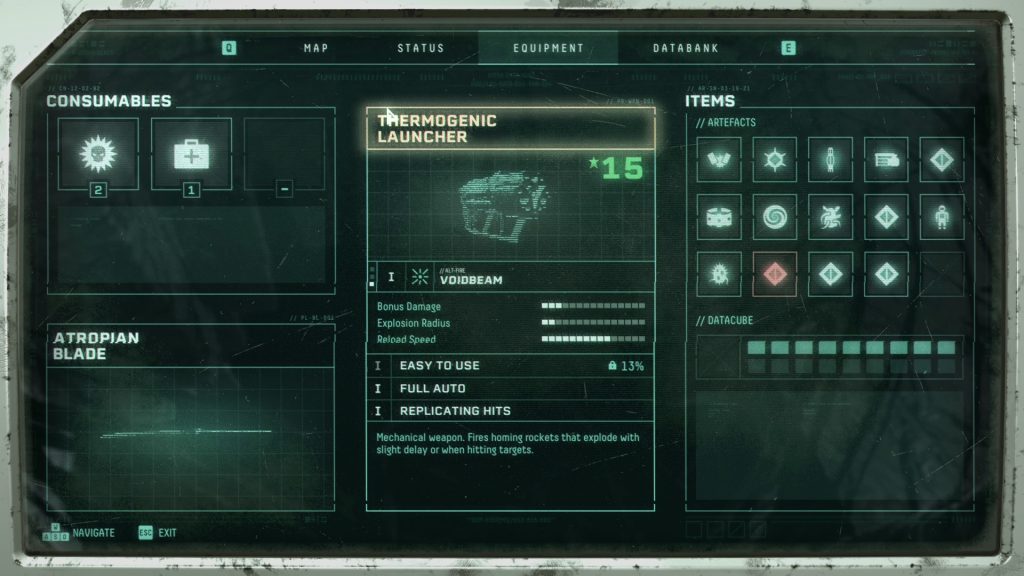
As you defeat enemies your weapon proficiency meter will fill and once full will show a number, representing your weapon proficiency level, and start the process again. The level your weapon proficiency is at will determine what level of weapons you will find in chests and occasionally dropped by enemies. Higher level weapons have more passive abilities and generally deal a greater amount of damage. Just like with everything else in this game, when you die your weapon proficiency will be reset.
You gain a level of adrenaline for each three enemies you kill up to a maximum of five levels. Each level of adrenaline will give you a random passive bonus in combat that stacks as you gain levels of adrenaline. Sometimes it’s as simple as increasing your damage output, but it can also be other abilities like being able to see an indicator on screen for nearby enemies when they’re obscured. Upon taking damage of any form you lose all levels of adrenaline.
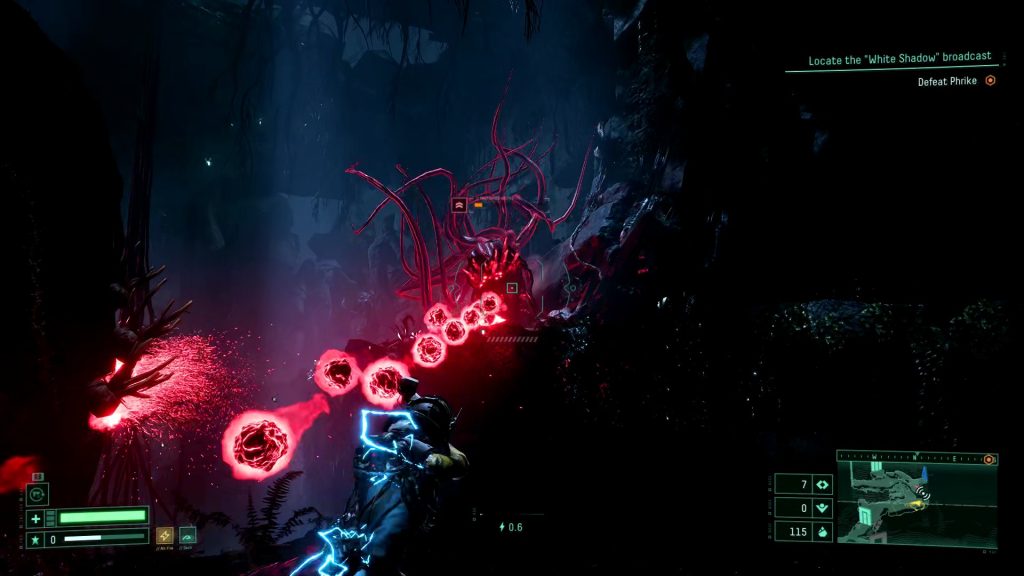
A defeated enemy will drop obolite and sometimes other items like siliphium (which I will cover shortly), weapons etc. Unlike other drops, obolite disappears after a short period of time. Obolite is the currency used to purchase items from fabricators you will find as you explore. Defeating an enemy isn’t the only way to gain obolite of course, sometimes it can also be found in yellow crystalised piles that you can collect.
Siliphium is a resource that will recover your health or in the case of siliphium resin will increase your suit’s maximum integrity (read that as maximum HP).
Besides the obolite, siliphium and weapons there are a few other things that you will find, such as consumables, artifacts and parasites.
Consumables, as the name implies, are items you can pick up and consume that will have an effect. Some will heal you, one puts your adrenaline to maximum and another can teleport you to a hidden room.
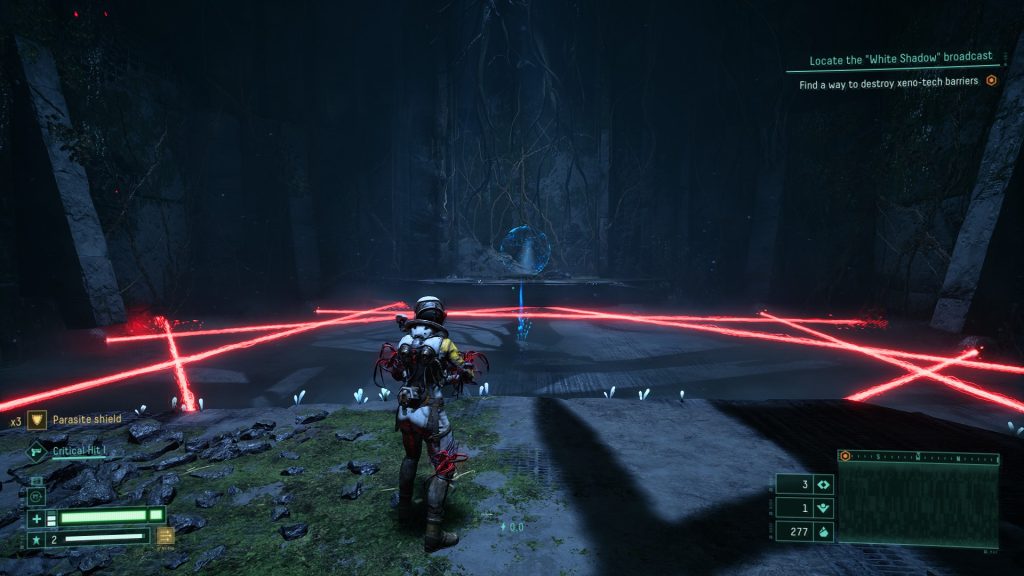
Artifacts provide beneficial passive effects, such as increasing your dash distance or letting you break through specific barriers. You can carry up to fifteen artifacts at a time and if you find one that would be more beneficial than another you are carrying you can choose to destroy one.
Parasites are, to me, one of the most interesting of the things you can find. When collected a parasite will grant a buff and also a debuff. You can have up to five parasites at once and sometimes you can find ones whose buffs and debuffs offset each other in such a way that you have a net positive. These parasites can be removed either by using a specific consumable or using a parasite extraction machine that can sometimes be found in a run.
Some items, containers and enemy projectiles can afflict a malfunction upon you. These malfunctions can be fairly minor to quite punishing and have a lot of range in their effects. For example, there is a malfunction that causes you to take damage from long falls (which you usually don’t), or makes enemies leave acid puddles that damage you when they die. Thankfully, each malfunction will have a goal you can complete to remove them, like opening a container or killing X number of enemies. These malfunctions and their goals remain on the top left of the screen until you achieve them. If you gain a simultaneous third malfunction this will trigger a ‘critical malfunction’ which will destroy an item you are carrying at random.
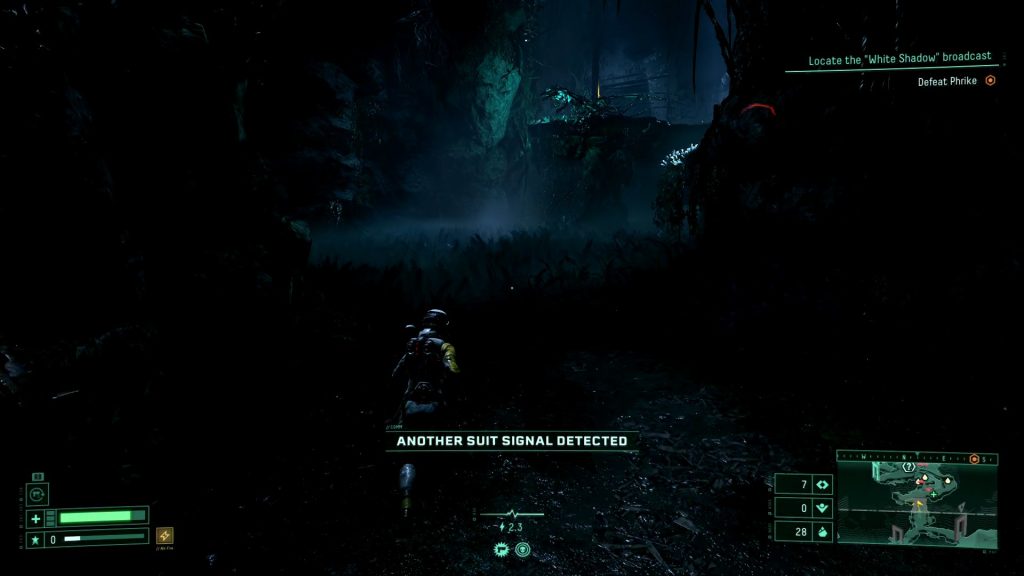
Occasionally you will find the bodies of other players that you can interact with by watching a hologram of what seems to be their last moments before they die. Once that has finished you can choose to either salvage avenge the player or there won’t be a choice and you’ll get attacked. If you choose to salvage it will cost three ether and you’ll receive an item in return. If you choose to avenge the player you have to fight a tough enemy, and if you succeed you’ll gain four ether. If you get attacked, you see the corpse of the player sprout tentacles and start to attack you. I personally found that these enemies weren’t difficult to deal with once I realised that they automatically retaliate upon being attacked.
Any item you collect, hostile you defeat and a number of other interactable objects are logged in your database where you can read more about them. Most of these entries have a research progress bar that will increase with each time you use an item or defeat an enemy. These entries can provide clues as to what is going on, though they may also mislead you.
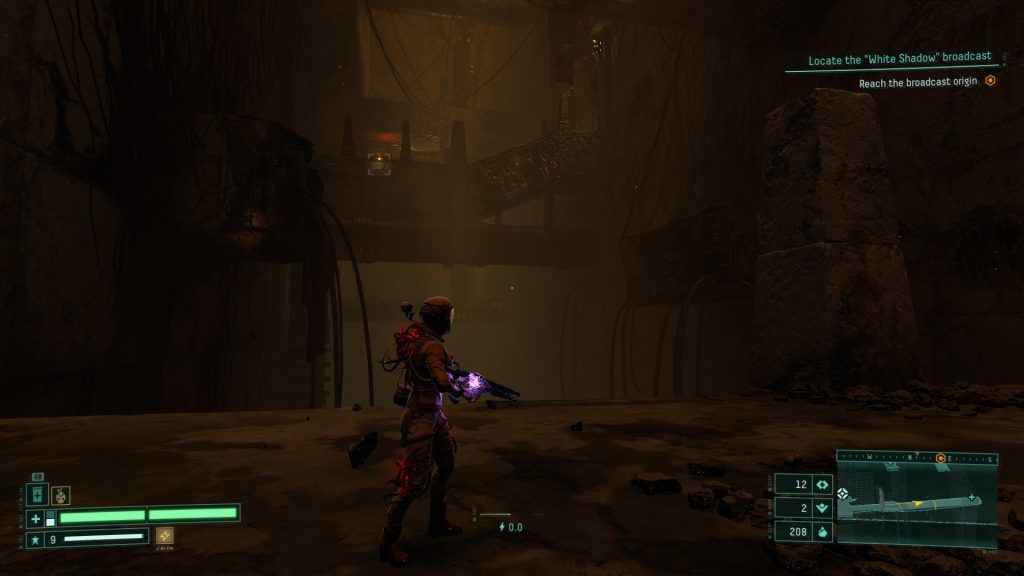
Once you’ve defeated the second boss you gain the ability to access Returnals other game mode called ‘The Tower of Sisyphus’. This is an endless game mode that will see you defeat many enemies and ascend the tower. Rather than being an endless mode that has been thoughtlessly tacked on it also gives more context to the story of the game. I didn’t actually touch this mode until after I had rolled credits, and it turned out that was a good idea, as you need all the abilities the game gives you to get the most out of it.
There is a multiplayer mode I didn’t experiment with as I focus on the single player experience. But seemingly, you and one other player can tackle a run together and it ends either when one of you dies or when the boss of the area is defeated.
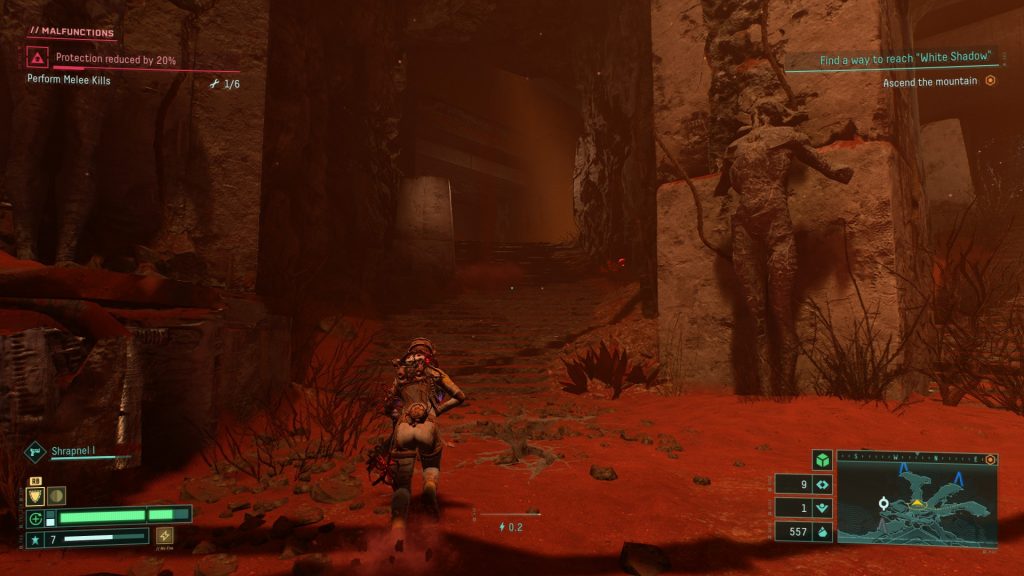
It seems all those roguelites that have been created by indie developers eventually attracted the attention of the AAA publishers. I suppose that is the fate of any genre that gains a lot of attention (meaning it can’t be too long before we get an attempt at a AAA Balatro-like). As far as I’m aware this is the first roguelite to be published by a mainstream company (IE Playstation or Xbox etc).
But the question is, did they make a good one? I’d say so, yes. I definitely enjoyed my time with it. Oh, you may notice I don’t actually speak on what occurs in the story beyond the crash at the start. Putting it simply, I shall just say that it wasn’t the narrative I expected, but I wasn’t disappointed.