Developer: SuperGiant Games
Publisher: SuperGiant Games
Rrp: £11.99
Released: 20th May 2014
Available on Steam and gog.com
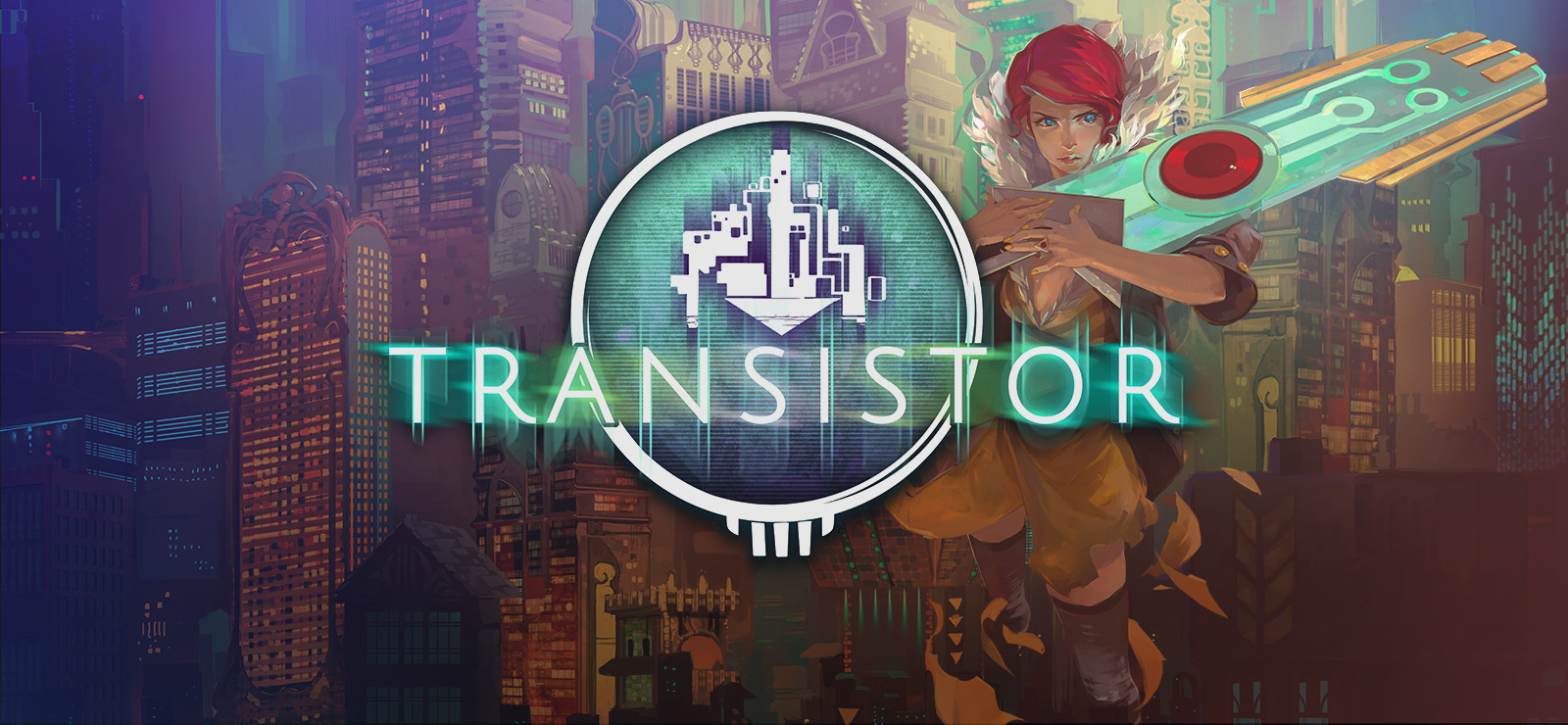
Transistor is the second game to be made by SuperGiant Games (the creators of Bastion). This time you play as a woman who everyone refers to as as ‘Red’.
Red is a silent protagonist (although there is a reason for that which is given later in the game) and she carries a rather large talking sword. Red and her mysterious sword are fighting against something known as ‘The Process’ that is chaanging their world and this game takes great pleasure in throwing you right into the middle of it. The story unfolds through snippets given by the sword and through unlocking the stories of the various Functions you install (I’ll clarify this statement later in the review).
The first thing I couldn’t help but notice about Transistor is that when it starts there isn’t any menu screen. It loads to a picture rather beautiful picture and it stays that way… At least until you do something like press a button, then it’s straight into the game.

Narration throughout the game is mostly delivered by the talking sword Red carries. The odd, almost off hand, comments that it makes as you interact with objects in the game or make choices. It’s not as clever as the way the narration was done in Bastion but I think it has its own merits especially when combined with the way the Functions reveal some of the worlds history (keep reading I promise I’ll get there).
Combat is semi turn based, you can fight your battles entirely in realtime if you so wish but it will make things much, much more difficult. Once combat begins you can activate the turn based mode, of course it’s not actually turn based. When in this mode you can plan out what moves you wish to perform and once you’ve confirmed these actions Red will carry them out faster than your enemies can move… Usually. After Red has performed the actions there’s a short delay for it to be recharged, it’s in this time you’re’ll be vulnerable as most of your Functions will be in a state of cooldown.
So now you’ve killed the enemy and it drops a item called a ‘cell’, well you better collect it quickly because a uncollected cell will cause the enemy to respawn. This can be particularly annoying when there are a lot of enemies on screen.
This game has one of the most unique, strange and interesting skill systems I’ve ever encountered. Each of the skills you acquire, which are actually named ‘Functions’, are simultaneously three things. It can be a move unto itself or it can be combined with already equipped Function enhancing it or lastly it can placed as a passive function giving passive effects. The equipping of these skills is given the term ‘Installing’ and this can only be done at designated ‘Access Points’. Of course there is only a finite amount of memory for you to install your skills and enhancements, this brings around a degree of skill management allowing you to customise your play style somewhat.
An interesting thing about these Functions is that each one is a person, for example the ‘Crash()’ (yes, the brackets are part of it) function, if inspected, reveals that it’s subject is Red herself and gives a bio on her. If you explore further you’ll find that you can read what effects are currently in play with the Function and what it can do when used as a upgrade. If you install the Function in a different setting such as making it a passive effect more information is unlocked about them, which gives you information as to just what is going on.
Some Functions are found as you progress, others are gained after defeating a major enemy, others still are unlocked when you level. Like with most rpg’s combat gives experience which in turn causes you to level. Each time you gain a level you’re given a choice of Functions you can unlock. Once you’ve chosen the Function you are given a choice of character upgrade, these generally tend to be choices like getting more memory or unlocking another enhancement slot on a skill. This choice moves you on to the last section of levelling, choosing a limiter to unlock. Limiters act like the temple in did in Bastion, by activating a limiter (which can only be done at a Access Point) you make the game more difficult for yourself BUT you also gain more experience.

I have to say I really like the art style of this game, there’s definitely some Art Deco inspiration but it’s been tempered with a cyberpunk aesthetic. The isometric angle they have chosen works well with showing off the artwork and makes the combat very easy to understand and plan out.
Add in a soundtrack that, usually, juxtaposes the action on screen and is simultaneously pleasing to the ear. It seems that SuperGiant have a knack for choosing unusual soundtracks.
Transistor also adds some replayabilty with a New Game+ mode that unlocks immediately after completing the game. Like most games with a New Game+ mode this allows you to start the game from the beginning but with all the skills you had at the end of the last game. Unlike most though it also makes The Process start at a higher level too, so you’ll need every last one of those skills.

In my eyes this game is something unique and great, is it better than Bastion? Maybe. I honestly can’t decide between them, thankfully I don’t have to. I don’t think I could recommend this more highly, it’s got style, he combat feels good and it has a sense of humour. Go get it.