Developer: Friedemann
Publisher: Future Friends Games
Steam Deck Compatibility?: Verified
Rrp: £6.69 (Steam)
Released: 24th October 2025
Available on: Steam
Played Using: Mouse and Keyboard
Approximate game length: 6 Hours
I have mixed feelings about gambling of any kind in video games, not because of how it affects children (though yes that too) but specifically how it targets vulnerable adults, especially those who are neurodivergent. But as long as the gambling aspect doesn’t involve actual money (or premium currencies) then I don’t mind it. Why do I say any of this? Because this game’s main mechanic is a slot machine and in playing this game I found myself returning to it over and over even when I’d completed the story, unlocked everything and got all the achievements. I tell myself it’s because the game is good, and I do believe it is, but I can’t help to question myself about it.
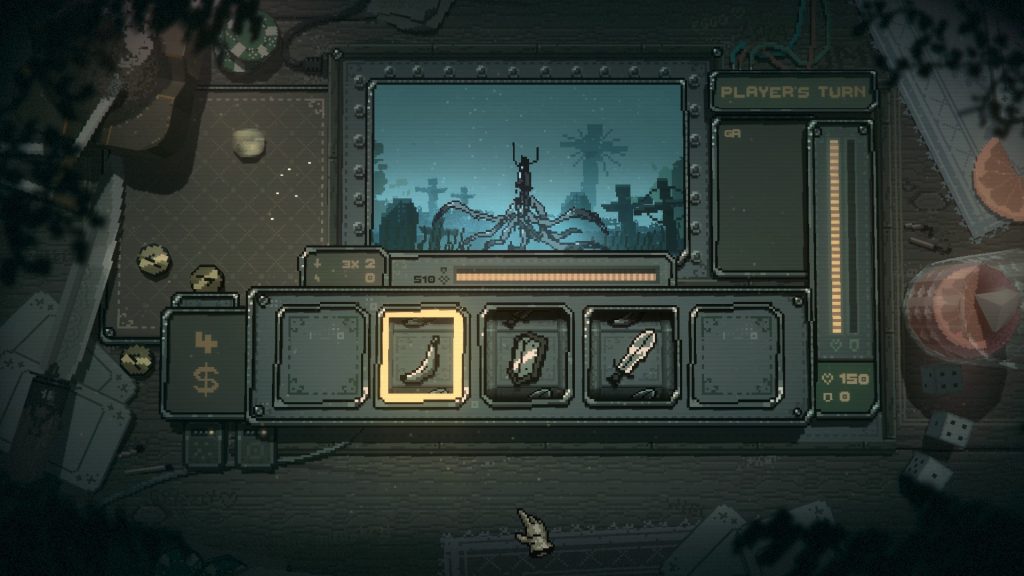
Slots & Daggers is a roguelite game where you fight bosses using a slot machine mechanic as a way to determine what you do. Thankfully, unlike a slot machine, each symbol actually matters even when not next to others of the same kind. What I mean by this is that if a shield symbol appears in the row you still get armour added.
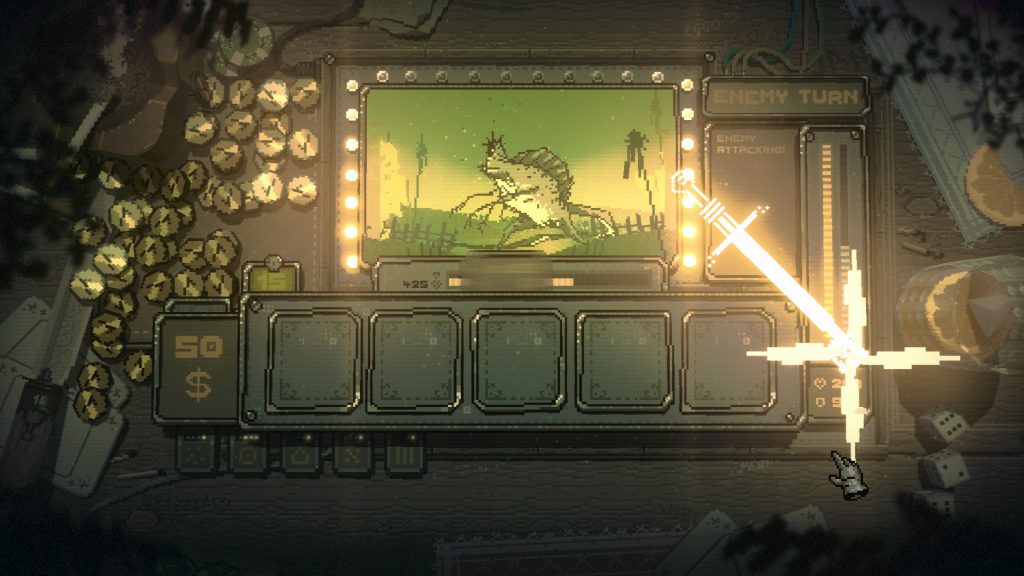
When you start a run you have to select three starting symbols. The symbols can roughly be categorised into these groups; weapons, offensive magic, shields, healing, money and buffs.
Some of the symbols require a ‘skill check’ to resolve, simply put this is one of those quick time events where you’re trying to stop a moving bar at the right point. It’s just that sometimes it shows as a book pulsing with magic power or a targeting reticule that you’re trying to hit the center of.
In your first few runs you’ll have only three slots to work with, but eventually you can upgrade to having five.
If you get three of any symbol it’s a ‘Critical Hit’, if you get five then it’s a ‘Mega-Crit’ (this can only occur once you have unlocked all of the slots). This can mean a few things depending on what the symbol is. If the symbol is a weapon then it does a lot of damage to the enemy, a money symbol will give a lot of coins etc.
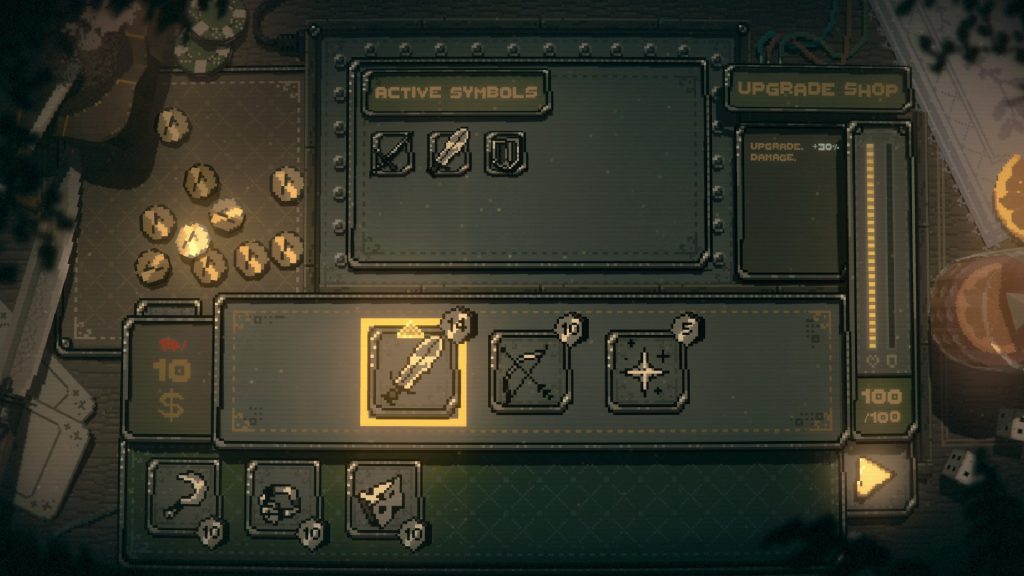
After you defeat an enemy your health is returned to full and any remaining armour is drained. Then you’ll be taken to a market screen where you can use the coins you’ve earned to buy new symbols, upgrade existing ones or purchase power ups. If you choose to buy a new symbol, beyond the initial three you selected, the option to remove symbols appears. This can allow you to customise what symbols will appear in your run, though you can’t reduce down to less than three.
Now that I’ve mentioned them I should go into a little detail. As mentioned earlier, power ups can be bought at the same time as new symbols. Power ups fall into two categories, passive and active. Passive power ups provide passive benefits to you as you play, such as increased healing or damage. Active power ups are ones that you actively choose to activate. Some active power ups require you to spend coins to use them and some will require you to perform a skill check.
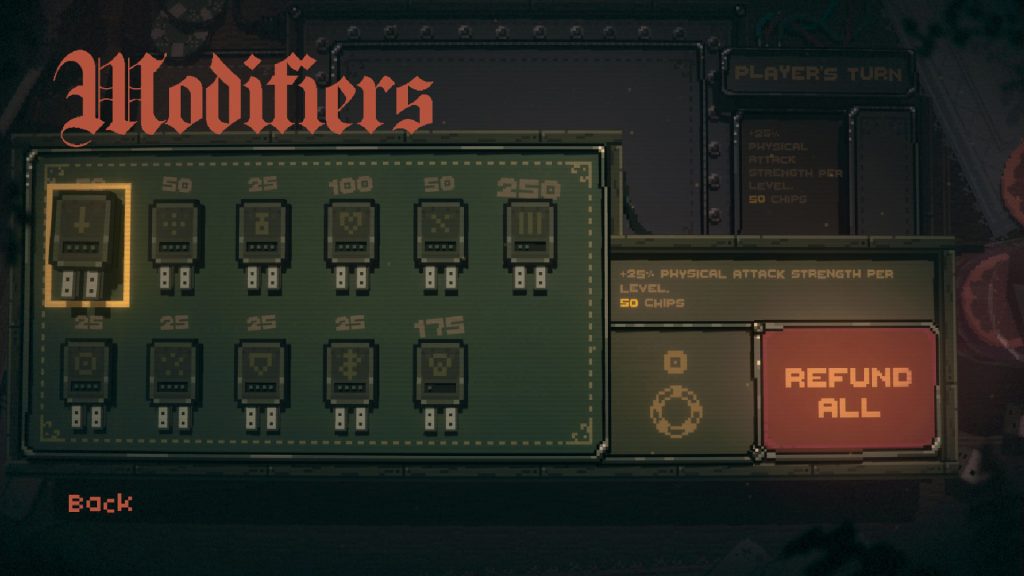
At the end of a run regardless of whether you win or lose you’re rewarded in chips (as in casino chips) and will unlock new symbols that will either appear in future runs or be available at the start of a new run. These chips are the only thing that persists between runs and allow you to purchase permanent upgrades called modifiers to the slot machine. These modifiers range from increasing your damage resistance through to unlocking new slots. The cost of a modifier increases with each purchase until you completely max it out.
I love the theming of this game, you see, the game seems to be set inside some kind of tavern or pub. The games screen is focused down at a monitor and slot machine set into the table itself. Around the edges of the slot machine you can see a drink and some dice, you can also hear the drone of people talking in the background. The whole thing feels a bit like a Ludum Dare game that was given a chance to be fleshed out.
Interestingly, as you play your actions will cause a set of three dice, that you can see on the table in the bottom right of the screen, to be rolled. You aren’t able to interact with those dice in any other way other than through your actions in the game. Sometimes these dice will land in such a way that their score gets added to what you’re doing. It’s a mechanic that’s entirely out of your control and if I’m honest, I’m not sure how much impact it actually has, but I still like that it’s there.
If it wasn’t obvious I really enjoyed my time with this game. It’s now joined the ranks of games that I play on my Steam Deck when I’m watching or listening to something.
If this appeals to you perhaps try;
Luck be a Landlord
Clover Pit